


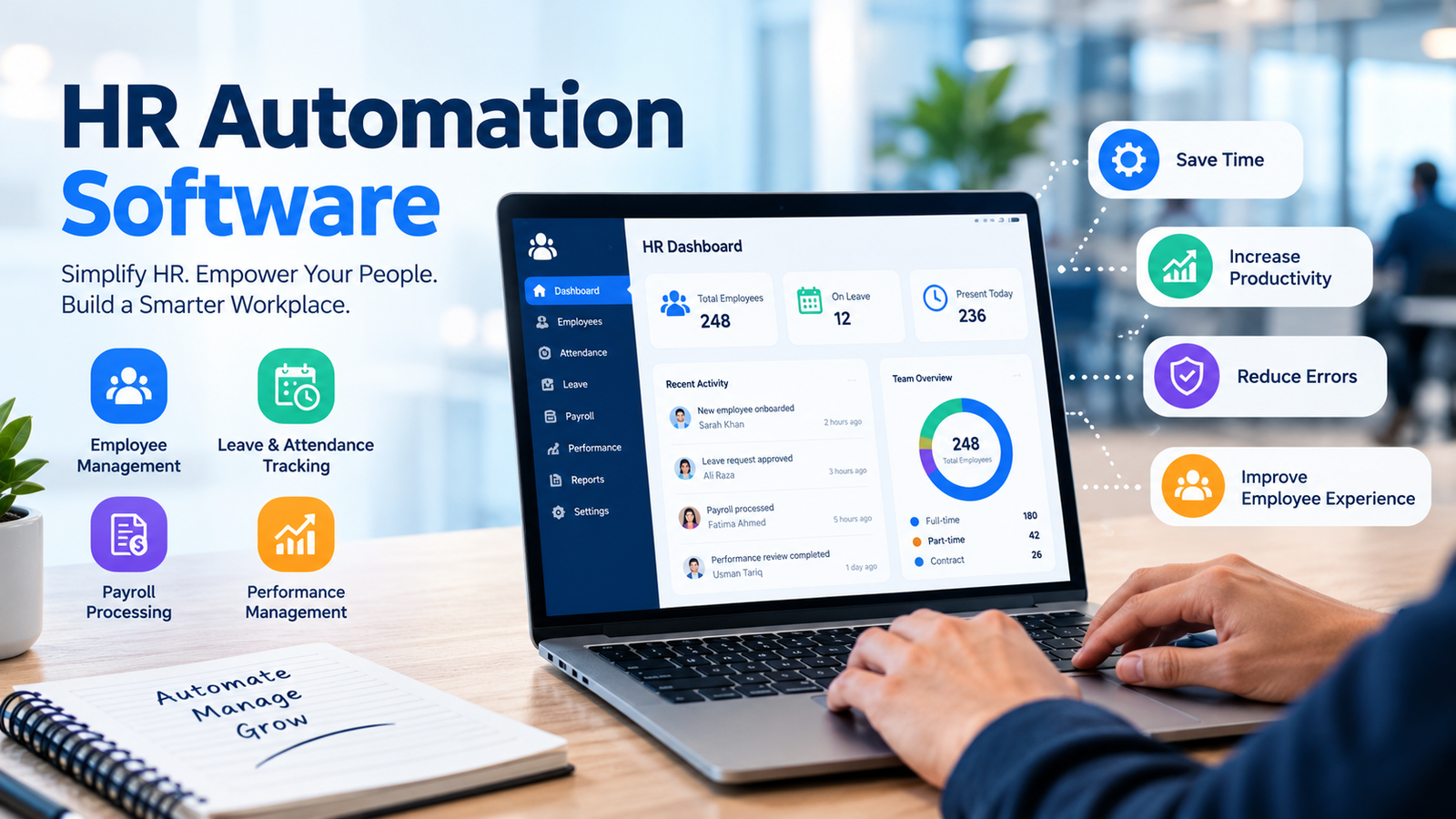
HR automation software refers to digital tools that handle repetitive human resources tasks like onboarding, payroll, leave approvals, and compliance tracking without manual intervention at every step. In 2026, this software has moved well beyond simple digitization, with AI-driven systems now executing multi-step workflows across hiring, data analytics, and employee self-service. Businesses adopt HR automation software to reduce administrative workload, cut processing errors, and free HR teams to focus on strategic work rather than paperwork.
What Does HR Automation Software Actually Do?
HR automation software digitizes and automates repetitive HR tasks including onboarding, payroll, leave approvals, and compliance workflows that previously consumed hours of manual work each week. The 2026 shift in this space has moved toward AI-driven orchestration across HRIS, payroll, and IT systems rather than simple rule-based digitization that earlier generations of HR software relied on. This means modern platforms don’t just store employee data; they actively trigger actions, flag compliance issues, and route approvals based on predefined or AI-generated logic.
The scope of automation has expanded significantly as adoption has grown. HR automation can reduce the cost of administrative tasks by up to 30 percent, while also reducing human error in data entry by over 90 percent compared to fully manual processes. These efficiency gains explain why automation has shifted from an optional upgrade to a near-standard expectation among growing organizations.
Why Are Companies Adopting HR Automation Software Now?
Companies are adopting HR automation software because HR teams are increasingly overworked and under-resourced relative to the volume of administrative tasks they manage. Employers who use automation or AI overwhelmingly report that it saves them time and increases their efficiency, with 85 percent confirming this benefit according to SHRM research. This time savings directly addresses one of HR’s most persistent challenges: balancing people-focused strategic work against repetitive administrative demands.
Beyond efficiency, automation is reshaping how HR makes decisions. Organizations increased their investment in analytics software, dashboards, and specialist people analytics technology over the past year, with 68 percent reporting this shift according to the Insight222 report, signaling a broader move from intuition-based HR management toward evidence-based decision-making.
What Specific Problems Does Automation Solve?
Automation directly addresses the volume problem that manual HR processes can’t scale to handle. Seventy-five percent of recruiters now use some form of recruitment or applicant tracking software, reflecting how hiring alone generates far more administrative volume than HR teams can process manually once a company grows past a certain size. Automated systems also reduce the compliance risk that comes with manual tracking, since missed deadlines or miscalculated leave balances can create legal exposure for employers.
What Core Features Should HR Automation Software Include?
The most useful HR automation platforms combine several distinct functions rather than handling just one isolated task. Core capabilities typically include automated onboarding workflows, payroll processing, leave and time-off management, compliance monitoring, and applicant tracking, all operating from a shared employee data record rather than siloed systems. This integration matters because disconnected tools tend to create duplicate data entry and inconsistent records across departments.
How Important Is System Integration?
Integration between HR and other business systems has become one of the defining priorities in HR technology purchasing decisions. Sixty-eight percent of employers say that increasing integration of their HR systems is a highly important priority according to Guardian research, reflecting a shift away from standalone point solutions toward connected platforms. Poor integration carries real costs: research on broader AI deployment found that nearly 95 percent of AI pilots fail to deliver meaningful return on investment specifically due to a lack of integration with existing systems.
How Is AI Changing HR Automation in 2026?
AI has moved HR automation from assisting with individual tasks to executing entire workflows with minimal human intervention. Agentic AI adoption in HR is projected to grow 383 percent, rising from roughly 12 percent of organizations today to 58 percent by 2027, representing one of the fastest shifts in enterprise HR technology. Unlike earlier automation that simply followed fixed rules, agentic AI systems can handle multi-step processes like onboarding, screening, and data updates with limited human oversight at each stage.
This shift is already visible in day-to-day HR operations. AI chat and voice agents now handle 80 percent of Level 1 and Level 2 HR and customer service queries, significantly improving response times while maintaining consistent support quality across large employee populations. CHROs expect this trend to compound further, with productivity gains and labor cost reductions factoring heavily into technology investment decisions.
What Are the Risks of Moving Too Fast With AI in HR?
Rapid AI adoption carries data governance and accuracy risks that organizations need to manage carefully. Because HR handles sensitive personally identifiable information, systems that lack rigorous governance can introduce compliance risk even while improving efficiency elsewhere. This is why many enterprise platforms are prioritizing deterministic execution and audit trails for AI-driven workflows rather than treating accuracy as a secondary concern.
What Should Small and Midsize Businesses Consider When Choosing HR Automation Software?
Small and midsize businesses should prioritize platforms that combine payroll, onboarding, and compliance in one system rather than purchasing multiple single-purpose tools. More than half of HR software users already use AI features within their existing platforms according to Capterra’s 2025 HR Software Trends survey, meaning AI capability has become a baseline expectation rather than a premium add-on even for smaller organizations. For growing startups specifically, payroll-first platforms tend to offer the fastest path to value since payroll errors create immediate compliance and employee trust problems.
How Does Company Size Affect Automation Priorities?
Larger enterprises tend to prioritize deep analytics and cross-system integration, while smaller businesses typically prioritize simplicity and speed of implementation. Thirty-eight percent of large enterprises with 5,000 or more employees are already utilizing AI in HR functions, reflecting their greater resources for complex technology rollouts compared to smaller companies still building out foundational HR infrastructure.
Common Misconceptions About HR Automation Software
A common misconception is that HR automation primarily benefits large enterprises with dedicated IT resources. In practice, smaller organizations often see proportionally larger gains because automation replaces the manual processes that would otherwise require hiring additional administrative staff as the company scales. Another misconception is that automation inevitably replaces HR jobs rather than changing what HR professionals spend their time on. While 37 percent of employees worry that automation will make their job obsolete, the more common outcome reported by HR leaders is that automation improves the human aspect of the workplace by freeing up time for higher-value work like employee relations and strategic planning.
A third misconception is that implementing AI-powered HR automation is simple if the underlying software is sophisticated. In reality, poor data quality and weak system integration undermine even advanced AI tools, which is why successful automation projects typically start with cleaning up existing HR data before layering AI capabilities on top.
Conclusion
HR automation software has evolved from basic task digitization into AI-driven systems capable of executing entire workflows across onboarding, payroll, and compliance with minimal manual oversight. The strongest implementations combine integrated platforms, reliable data governance, and a clear understanding of which tasks genuinely benefit from automation versus those still requiring human judgment. Readers exploring this topic further might also look into applicant tracking systems specifically, or the broader role of people analytics in modern workforce decision-making.
Frequently Asked Questions
What is HR automation software?
It’s digital software that automates repetitive HR tasks like onboarding, payroll, leave approvals, and compliance tracking, replacing manual processes that previously required extensive hands-on administration.
How much time or cost can HR automation save?
HR automation can reduce administrative task costs by up to 30 percent and cut data entry errors by over 90 percent, with 85 percent of employers reporting time savings and efficiency gains.
Is AI the same thing as HR automation?
Not exactly. Traditional HR automation follows fixed rules, while AI-powered automation (especially “agentic AI”) can handle multi-step workflows like onboarding or screening with far less human oversight at each stage.
Do small businesses need HR automation software too?
Yes. Smaller organizations often see proportionally larger gains, since automation replaces manual processes that would otherwise require hiring additional administrative staff as the company grows.
Will HR automation replace HR jobs?
Not typically. Most HR leaders report that automation frees up time for higher-value work like employee relations and strategy rather than eliminating HR roles entirely.
What should I look for when choosing HR automation software?
Prioritize platforms that integrate payroll, onboarding, and compliance in one system, since poor integration between tools is one of the biggest reasons automation projects fail to deliver real value.
What’s the biggest risk of adopting AI-driven HR automation too quickly?
Weak data governance. Since HR handles sensitive personal information, rushing AI adoption without proper oversight and audit trails can introduce compliance risk even while improving day-to-day efficiency.


