


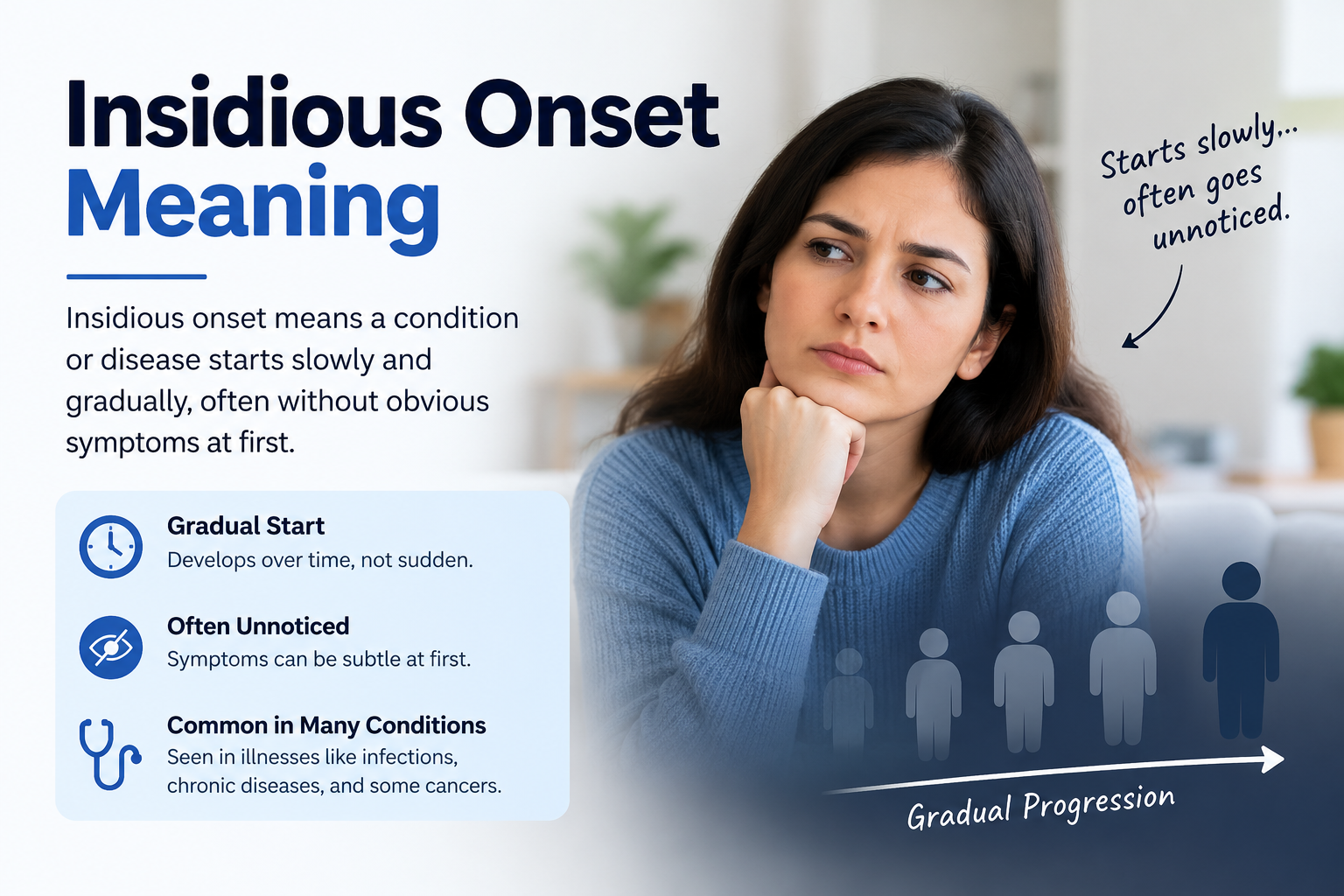
Insidious onset means a condition or illness that starts slowly and becomes noticeable over time. At first, the symptoms may be so mild that a person does not realize anything is wrong. As time passes, the symptoms may become more noticeable or begin to affect daily life. Doctors commonly use the term insidious onset to describe illnesses that develop gradually rather than appearing suddenly.
What Does Insidious Onset Mean?
Insidious onset describes a problem that develops slowly without clear warning signs. Instead of starting all at once, the symptoms appear gradually and may become more noticeable over days, weeks, months, or even years.
For example, imagine someone who starts feeling tired more often than usual. At first, they may think they need more sleep or are simply working too hard. However, if the tiredness continues and becomes worse over several months, it could be an example of a problem with an insidious onset.
The term does not automatically mean that a condition is dangerous. It simply explains how the problem begins and develops. The seriousness depends on the underlying cause and the symptoms a person experiences.
What Does Insidious Onset Mean in Medical Terms?
In medical language, insidious onset means that the symptoms of an illness develop gradually and may be difficult to recognize at first. Doctors use this phrase when a patient cannot easily identify when the condition began.
How Doctors Use the Term
Doctors may use the phrase when a patient describes symptoms that have slowly developed over time. For example, someone might say that their joints have become stiffer over several months, even though they cannot remember exactly when the problem started.
This information helps doctors understand how the illness developed. They may ask when the first symptoms appeared, whether they have become worse, and how they affect everyday activities.
Does Insidious Onset Mean a Serious Illness?
Not always. Some conditions that develop slowly are mild and manageable, while others need medical attention. The term itself does not tell us whether a disease is serious.
For this reason, people should not ignore symptoms simply because they appear gradually. If a health problem continues, becomes worse, or interferes with daily life, speaking with a healthcare professional is a sensible step.
What Are Some Examples of Insidious Onset?
Insidious onset can occur when the symptoms of a condition develop slowly instead of appearing suddenly. Here are a few simple examples to help explain the meaning.
Example 1: Gradually Developing Joint Pain
A person may begin to notice mild pain or stiffness in their knees after walking. At first, the discomfort may happen only occasionally, so they may not think much about it.
Over time, the stiffness may become more frequent, and climbing stairs may become uncomfortable. This gradual development can be described as an insidious onset, although the symptoms alone cannot identify the exact condition.
Example 2: Slowly Developing Neurological Symptoms
Some conditions that affect the brain and nervous system begin with small changes. For example, Parkinson’s disease may start with a slight tremor, slower movements, or changes in handwriting.
These early signs may be easy to overlook because they develop gradually. As other symptoms appear, the person may decide to seek medical advice.
Example 3: An Infection That Develops Slowly
Some infections, including tuberculosis, may cause symptoms that develop over several weeks or months. A person might experience a persistent cough, tiredness, fever, or unexplained weight loss.
Because these symptoms may develop slowly, the person might initially believe they are caused by something less serious. However, persistent symptoms should be checked by a healthcare professional.
What Is the Difference Between Insidious Onset and Acute Onset?
The main difference is how quickly the symptoms begin. Insidious onset develops gradually, while acute onset usually involves symptoms that appear suddenly or over a short period.
Insidious Onset
With an insidious onset, the symptoms may begin so slowly that the person does not notice them immediately. The problem may become clearer only after some time has passed.
For example, a person might experience increasing tiredness for several months before realizing that it is affecting their daily routine.
Acute Onset
An acute onset happens when symptoms develop suddenly or quickly. For example, a person may suddenly experience severe abdominal pain or develop a high fever over a short period.
Acute does not always mean dangerous, just as insidious does not always mean serious. The importance of the symptoms depends on their cause and severity.
| Feature | Insidious Onset | Acute Onset |
|---|---|---|
| Beginning | Slow and gradual | Sudden or rapid |
| Early symptoms | Often mild or subtle | Often noticeable quickly |
| Starting point | Difficult to identify | Usually easier to identify |
| Example | Gradually increasing stiffness | Sudden severe pain |
What Are the Common Signs of Insidious Onset?
The signs depend on the condition, but they often begin as small changes that gradually become more noticeable. There is no single symptom that applies to every case.
Common examples include ongoing tiredness, mild pain that becomes more frequent, gradually increasing stiffness, unexplained weight loss, or changes in movement. Some people may also notice that they cannot complete everyday tasks as easily as before.
These symptoms can have many different causes, and they do not always indicate a serious illness. However, if symptoms continue, become worse, or affect normal activities, a medical assessment can help identify the cause.
How Do Doctors Diagnose a Condition With Insidious Onset?
Doctors usually begin by asking about the symptoms and how they have changed over time. They may also perform a physical examination and recommend tests if needed.
Talking About the Symptoms
A doctor may ask when the symptoms first appeared, how often they occur, and whether they have become worse. They may also ask about medications, previous health problems, and changes in everyday activities.
It is helpful to describe the earliest changes, even if they seemed unimportant at the time. You do not need to remember the exact date when the symptoms started.
Medical Examinations and Tests
Depending on the symptoms, a doctor may recommend blood tests, medical imaging, or other examinations. The purpose is to understand what is causing the problem rather than simply confirm that it developed gradually.
Not everyone needs the same tests. The doctor chooses the next steps based on the person’s symptoms, medical history, and examination findings.
Is Insidious Onset the Same as Chronic?
No. Insidious onset describes how a condition begins, while chronic describes a condition that lasts for a long time.
For example, back pain may develop gradually over several weeks. If the pain continues for months, the condition may also be described as chronic, depending on the circumstances.
However, a chronic condition can begin suddenly, and a condition with an insidious onset does not always become chronic. The two terms describe different things: one explains the beginning, and the other describes the duration or course of the condition.
When Should You See a Doctor?
You should consider seeing a doctor when symptoms continue, become worse, or start affecting your daily life. A gradual beginning does not mean that the problem should be ignored.
For example, ongoing fatigue, persistent pain, unexplained weight loss, or gradually increasing weakness may need medical assessment. A healthcare professional can help determine whether the symptoms require further investigation.
Some symptoms need emergency attention, even if you have experienced other gradual changes. Sudden weakness on one side of the body, difficulty speaking, severe chest pain, or serious breathing problems require immediate medical help.
Conclusion
Insidious onset means that a condition develops slowly and may go unnoticed in its early stages. Doctors use the term to describe the beginning of an illness, not to determine how serious it is. Understanding insidious onset makes medical language easier to follow and helps explain why some conditions are difficult to recognize at first. Learning about acute onset and the difference between acute and chronic conditions can also help you understand common medical terms.


