


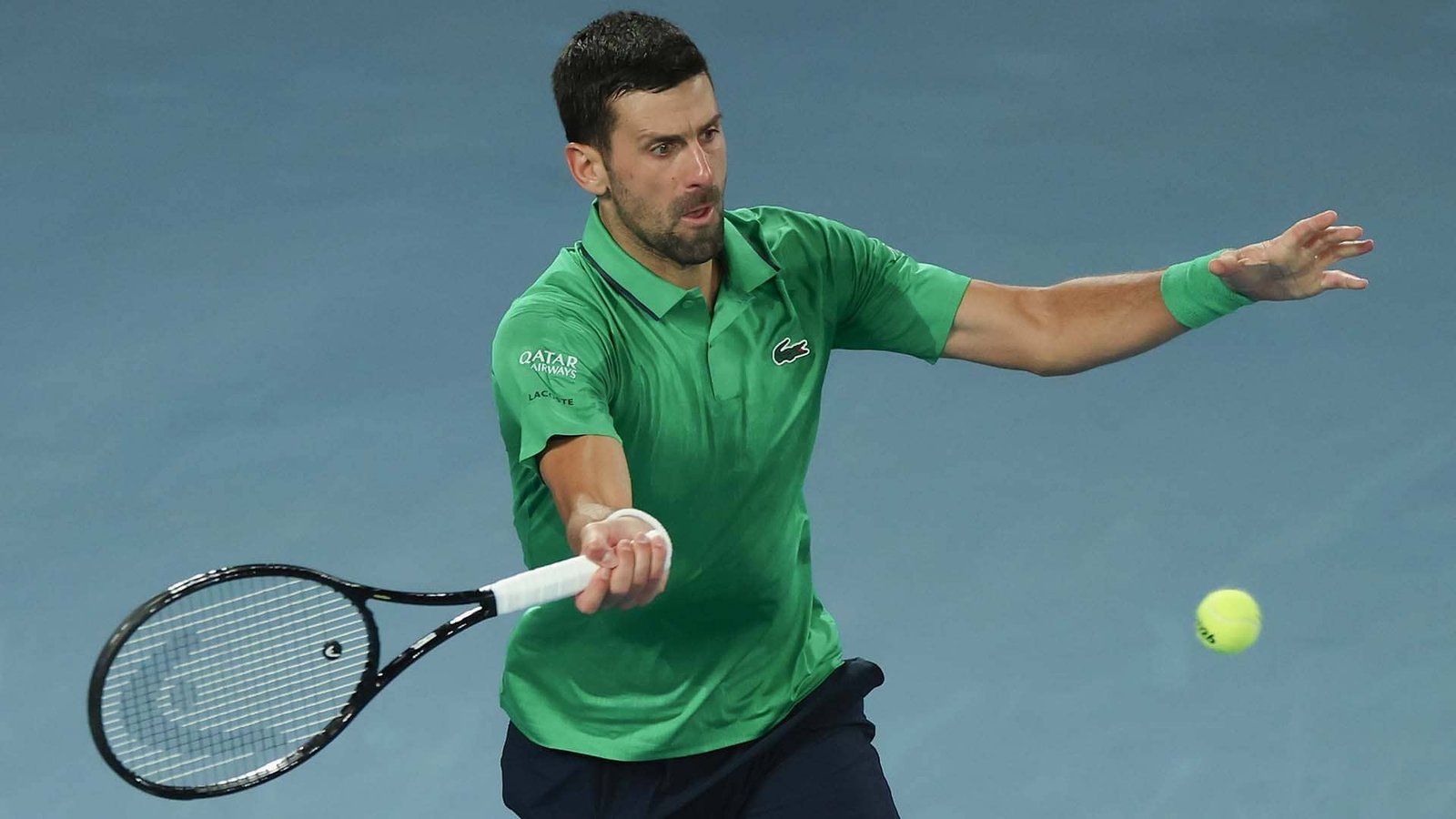
Djokovic’s Journey to the Top
Novak Djokovic is one of the most recognizable names in modern tennis, a player whose career has been defined by extraordinary consistency, mental strength, and an almost relentless desire to improve. Born in Belgrade, Serbia, Djokovic began playing tennis at a young age and quickly showed that he possessed something special. His rise was not immediate, but his determination helped him develop from a promising junior into one of the greatest players the sport has ever seen.
What makes Djokovic’s story particularly interesting is the combination of talent and persistence behind his success. He entered an era dominated by other major stars, yet he gradually established himself as an equal and eventually became a dominant force of his own. His ability to compete against the best players in the world for more than a decade has made his career remarkable even by the standards of professional tennis.
Djokovic’s journey also reflects the changing nature of modern sport. He became known not simply for powerful shots, but for his ability to adapt, analyze opponents, and remain competitive in physically demanding matches. His career demonstrates how technical ability, fitness, discipline, and psychological strength can work together to produce long-term success.
A Playing Style Built on Precision and Defense
One of Djokovic’s biggest strengths has always been his return of serve. Against many opponents, his ability to neutralize a powerful first serve and immediately put pressure on the server changes the entire rhythm of a match. He has developed a reputation for returning difficult serves with remarkable accuracy, often turning defensive situations into opportunities to attack.
His groundstrokes are another important part of his game. Djokovic’s two-handed backhand is particularly famous because of its stability, depth, and ability to handle powerful shots. He can hit it down the line or crosscourt with impressive control, making it difficult for opponents to predict where the next ball will go. His forehand is equally effective, especially when he finds enough space to dictate rallies.
Movement has also played a major role in his success. Djokovic has been exceptional at reaching balls that many players would consider almost impossible to retrieve. His flexibility and balance allow him to slide into defensive positions and still produce accurate shots. Instead of relying only on aggression, he often forces opponents to play one more ball, creating pressure that eventually leads to an error or an opening.
Mental Strength and Competitive Personality
Perhaps the most discussed part of Djokovic’s game is his mental strength. Tennis is an individual sport, meaning players cannot rely on teammates to recover from a bad moment. A player can dominate for an hour and then suddenly find himself facing a difficult situation. Djokovic has repeatedly shown an ability to remain focused during these turning points.
His confidence has often been visible in long matches and high-pressure situations. When an opponent has momentum, Djokovic can change his approach, slow the pace, or become more aggressive when necessary. This ability to make tactical adjustments is one reason he has remained competitive against different generations of players.
There have also been moments when Djokovic has faced intense pressure away from the tennis court. Public expectations, media attention, injuries, and controversial moments have all become parts of his professional story. Whether people agree with every decision he has made or not, his ability to continue competing at the highest level has contributed significantly to his reputation as one of tennis’s toughest competitors.
Grand Slam Success and Historic Achievements
Grand Slam tournaments have been central to Djokovic’s legacy. Winning these events requires more than excellent tennis for a few days. Players must survive multiple rounds, handle changing opponents, manage physical fatigue, and perform under enormous pressure. Djokovic has demonstrated an exceptional ability to do exactly that.
His success at the Australian Open became one of the defining chapters of his career. The tournament has often suited his baseline game, movement, and ability to handle demanding rallies. Over the years, his performances there helped establish him as one of the most successful players in the history of the competition.
His achievements at Wimbledon, the US Open, and the French Open have further strengthened his historical position. Winning on different surfaces requires tactical flexibility. Grass rewards quick reactions and efficient serving, clay demands patience and endurance, while hard courts often require a balance between defense and attack. Djokovic’s success across these environments shows how complete his game has become.
The Rivalry With Federer and Nadal
Djokovic’s career cannot be fully discussed without mentioning Roger Federer and Rafael Nadal. Together, the three players formed one of the most fascinating rivalries in tennis history. Each brought a different personality and playing style to the sport, and their repeated encounters created some of the most memorable matches of the modern era.
Federer was admired for his elegant movement, attacking tennis, and effortless-looking technique. Nadal became famous for his intensity, powerful forehand, physical strength, and extraordinary success on clay. Djokovic developed his own identity through his returning ability, defensive skills, flexibility, and mental resilience.
Their rivalries pushed all three players to improve. A match against Federer required Djokovic to deal with an aggressive and highly versatile opponent. Facing Nadal often meant surviving physical rallies and heavy topspin. These challenges forced Djokovic to develop a more complete game, and their battles helped define an entire generation of professional tennis.
Djokovic’s Physical Preparation
Modern tennis places enormous demands on the body, particularly for players who compete at the highest level for many years. Djokovic has paid close attention to physical preparation, recovery, flexibility, nutrition, and training. His ability to maintain his movement and endurance over long matches has been an important part of his longevity.
Flexibility is one area where Djokovic has stood out. His ability to stretch for difficult balls while maintaining control has become almost symbolic of his defensive style. This flexibility is not simply about making spectacular highlights; it allows him to stay in rallies when an opponent appears to have already won the point.
Recovery has become equally important as his career has progressed. Playing professional tennis for many years requires managing fatigue and reducing the risk of injuries. Djokovic has frequently emphasized preparation and recovery as important parts of his routine, showing that elite performance is about what happens away from the match as much as what happens during it.
The Importance of Discipline and Adaptation
One reason Djokovic has remained successful for so long is his willingness to adapt. Tennis constantly changes, with younger players bringing different physical abilities, serving styles, and tactical approaches. A strategy that worked perfectly several years ago may not be enough against a new generation.
Djokovic has generally been willing to modify his game when necessary. He can play patiently from the baseline, attack when an opportunity appears, or use his return to immediately pressure an opponent. This tactical variety makes him difficult to prepare for because he does not depend on only one style of tennis.
Discipline has also been essential. At the highest level, small improvements can make a major difference. Players need to maintain training routines, analyze opponents, manage travel, and remain mentally prepared throughout a long season. Djokovic’s career illustrates how consistency in these areas can help extend an athlete’s time at the top.
Djokovic and the Next Generation of Tennis
As Djokovic’s career has continued, a new generation of players has emerged. Younger stars have brought greater physical intensity, powerful serves, aggressive baseline tennis, and new tactical ideas. Their rise has created a fascinating transition period in men’s tennis.
Djokovic has often found himself competing against players who grew up watching him, Federer, and Nadal. That creates an interesting dynamic because the younger generation has both admiration and ambition. They are not simply competing against an established champion; they are attempting to create their own place in tennis history.
For Djokovic, competing against younger opponents has required constant adaptation. Experience gives him tactical knowledge, but younger players can sometimes have physical advantages. His ability to remain competitive despite these differences has added another dimension to his legacy.
The Global Impact of Djokovic
Djokovic’s influence extends beyond tournament results. He has become one of Serbia’s most internationally recognized athletes and has played an important role in raising the profile of tennis in the country. His success has inspired many young Serbian athletes to take an interest in the sport.
His international popularity has also helped tennis reach audiences that may not traditionally follow the sport. Major matches involving Djokovic often attract enormous attention because of his reputation and the history surrounding his career. His personality, competitive nature, and achievements have made him a major figure in global sports.
At the same time, Djokovic has always been a figure who generates strong opinions. Supporters admire his determination and achievements, while critics have questioned some of his decisions and public positions. That complexity has made his public image more interesting than that of a typical sports star.
Life Beyond the Tennis Court
Although tennis has dominated Djokovic’s public life, his interests extend beyond competition. Like many elite athletes, he has been involved in charitable activities and initiatives connected with children, education, and community support. His foundation has also been associated with efforts focused on improving opportunities for young people.
Family has been another important part of his public story. Djokovic has spoken about the importance of balancing professional responsibilities with personal life. For an athlete who spends much of the year traveling internationally, maintaining relationships and a sense of normality can be challenging.
His life away from tournaments also highlights the reality of professional sport. Fans often see only the final match, trophy ceremony, or celebration. Behind those moments are years of preparation, travel, sacrifices, difficult losses, and constant pressure. Djokovic’s career provides a clear example of how much work is required to sustain excellence.
Why Djokovic’s Legacy Will Last
Djokovic’s legacy will ultimately be measured through statistics, records, titles, and memorable victories, but numbers alone do not explain his impact. His career has changed expectations about how long a professional tennis player can remain competitive at the highest level.
His greatest qualities have often been connected to resilience. He has experienced difficult losses and challenging periods, yet he repeatedly returned to competition with the goal of improving. That ability to respond to setbacks is one of the strongest lessons his career offers to athletes and fans alike.
The significance of Djokovic’s career also comes from the era in which he played. Competing alongside Federer and Nadal created an exceptionally demanding environment, while facing a new generation later in his career added another challenge. His ability to remain relevant across these different periods makes his story unusually impressive.
The Lasting Influence of a Tennis Icon
Novak Djokovic has become much more than a successful tennis player. His career represents an unusual combination of technical excellence, physical preparation, competitive intelligence, and mental resilience. From his early development in Serbia to his battles on the biggest courts in the world, his journey has been built around the willingness to keep improving.
His influence will likely continue even after his playing career eventually comes to an end. Future players will study his return of serve, movement, backhand, tactical decisions, and approach to pressure. Young athletes will also look at his longevity as evidence that preparation and discipline can be just as important as natural talent.
Whatever the final chapter of Djokovic’s professional career looks like, his place in tennis history is already firmly established. He belongs to a generation that transformed the sport and raised the standard of elite competition. His story is not simply about winning matches; it is about staying motivated, adapting to change, and continuing to compete when the pressure is greatest. That combination is what makes Djokovic one of the defining tennis figures of his era.