


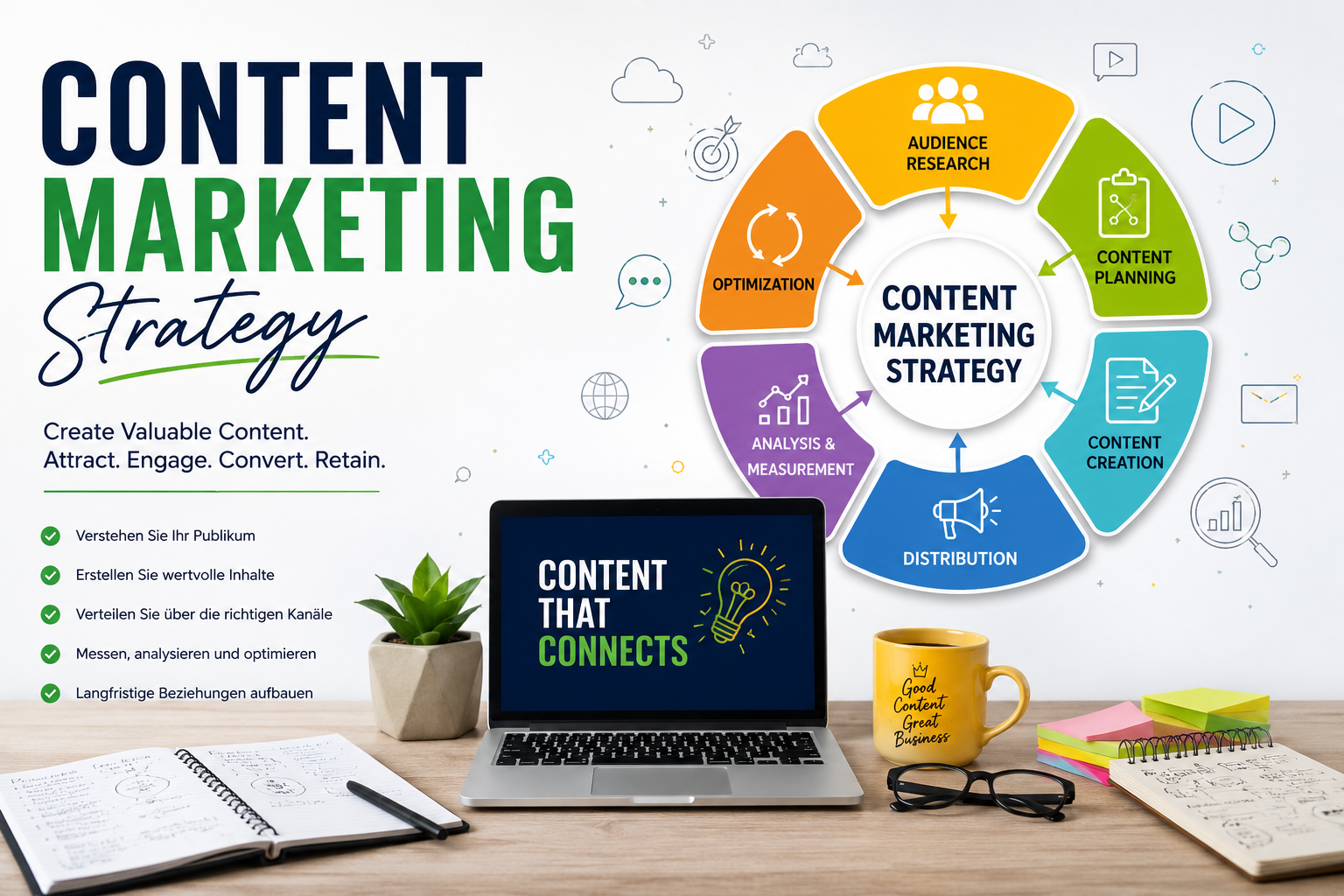
Content marketing strategy sounds like a complicated business term, but the basic idea is quite simple: create useful content for the right people, publish it consistently, and use it to build trust with your audience. The challenge is that many businesses jump straight into writing blog posts, creating social media content, or producing videos without first deciding what they actually want that content to achieve.
A strong content marketing strategy gives every piece of content a purpose. Instead of publishing simply because the calendar says it is time to post something, you know who you are trying to reach, what problem you are solving, which platform makes sense, and what action you want people to take afterward. This makes content more focused and much easier to measure.
Whether you run a small business, an online store, a personal brand, or a large company, a thoughtful strategy can help you attract new visitors, improve brand awareness, generate leads, and build long-term relationships with customers. The key is to focus less on producing content for the sake of producing content and more on creating material that genuinely helps your audience.
What Is a Content Marketing Strategy?
A content marketing strategy is a structured plan for creating, publishing, distributing, and measuring content. It explains what kind of content you will produce, who that content is for, where it will be published, and how it supports your wider business goals. Content can include blog articles, videos, guides, newsletters, social media posts, case studies, podcasts, infographics, and more.
The most important part of a strategy is understanding that content should serve a purpose. For example, a detailed educational article might be designed to attract people searching for information on Google, while a short social media video could introduce your brand to people who have never heard of it. Both are content, but they serve different stages of the customer journey.
Without a strategy, businesses often create random topics based on whatever seems interesting at the moment. That approach can produce occasional results, but it rarely creates consistent growth. A strategy provides direction, helping you make smarter decisions about your time, budget, and creative resources.
Why Content Marketing Strategy Matters
One of the biggest advantages of content marketing strategy is that it can build trust before someone ever becomes a customer. People naturally want to understand a product, service, or company before spending their money. Helpful content gives them an opportunity to learn from you without feeling pressured into making a purchase.
Content can also support organic search visibility. When you consistently create useful, relevant resources around topics your audience cares about, your website has more opportunities to appear in search results. Over time, a well-organized collection of valuable content can become an important source of qualified traffic.
Another benefit is long-term value. A paid advertisement generally stops producing traffic when the campaign ends, while a useful article, tutorial, or guide can continue attracting visitors months or even years after publication. This does not mean every piece will become a permanent traffic source, but quality evergreen content can continue working long after its initial publication.
Start by Defining Your Target Audience
Before creating content, you need to know exactly who you are talking to. A strategy aimed at “everyone” usually ends up being too general to connect strongly with anyone. Instead, identify the specific groups most likely to need your product, service, or expertise.
Consider their goals, challenges, questions, interests, experience level, and buying behavior. If you sell SEO services, for example, your audience could include small business owners who understand that search visibility matters but do not know how to improve their websites. That audience needs different content from professional SEO specialists who already understand technical optimization.
Audience research should also influence your language and tone. Beginners may appreciate simple explanations and practical examples, while experienced professionals may prefer detailed analysis, data, and advanced techniques. The more clearly you understand your audience, the easier it becomes to create content that feels relevant rather than generic.
Set Clear content marketing strategy Goals
A content marketing strategy should always connect to measurable goals. Simply saying that you want “more content” is not a meaningful objective. You need to understand what successful content is supposed to accomplish for your business content marketing strategy.
Your goals might include increasing organic traffic, generating leads, improving email subscriptions, increasing product sales, building brand awareness, or strengthening customer retention. Different goals require different content approaches, so defining them early prevents wasted effort content marketing strategy.
It is also useful to separate short-term and long-term objectives. A new website might initially focus on building visibility and attracting its first consistent visitors. As the audience grows, the strategy can shift toward lead generation, conversions, customer education, and retention. Your goals should evolve as your business develops content marketing strategy.
Research Topics Your Audience Actually Cares About
Good content begins with good topic research. Instead of choosing topics solely because they sound interesting, look for questions and problems your target audience genuinely wants to solve. Search behavior, customer conversations, industry discussions, competitor content, and frequently asked questions can all provide useful ideas.
Keyword research can also help identify the language people use when looking for information online. However, keywords should not become the entire strategy. A page stuffed with repetitive search terms may look optimized on paper but provide a poor experience for real readers.
Think in terms of topics and problems rather than individual keywords. If your main subject is “content marketing strategy,” related topics could include content planning, audience research, content calendars, SEO content, content distribution, performance measurement, and repurposing. Building connected resources around a central topic can create a much stronger content ecosystem.
Create Different Types of Content
Not every audience member consumes information in the same way. Some people enjoy long-form articles, while others prefer short videos, podcasts, visual guides, or quick social media posts. A flexible strategy can use several content formats instead of relying on only one.
Blog posts are particularly useful for answering detailed questions and building search visibility. Videos can demonstrate processes or communicate ideas quickly. Case studies can show real-world results, while newsletters provide a direct communication channel with an existing audience.
The goal is not to use every possible format. That can quickly become overwhelming, especially for small teams. Instead, choose formats that match your audience and available resources. It is better to produce two excellent content formats consistently than to create ten mediocre ones.
Build a Realistic Content Calendar
A content calendar helps turn a strategy into an actual publishing system. It can include the topic, format, target audience, primary keyword or theme, publishing date, author, platform, and promotion plan. The exact structure is less important than having a reliable process.
Consistency is more valuable than unrealistic publishing frequency. If your team can comfortably create one high-quality article each week, there is little reason to promise five articles every week and then struggle to maintain the schedule.
A calendar also makes it easier to balance different types of content. You can plan educational pieces, product-focused content, seasonal topics, customer stories, and promotional material without allowing one category to dominate everything else. Over time, this creates a healthier and more varied content strategy.
Focus on Quality Instead of Content Volume
The internet already contains an enormous amount of content. Publishing more information simply for the sake of increasing volume does not guarantee better results. In many cases, producing fewer but more useful resources is a smarter approach.
Quality means more than making an article long. A strong piece should answer the reader’s question clearly, provide useful information, use logical organization, and avoid unnecessary repetition. Original examples, practical advice, expert insights, and clear explanations can make ordinary topics much more valuable.
It is also important to review older content. Information can become outdated, links can stop working, and search intent can change. Updating valuable articles can sometimes be more productive than constantly creating new ones. A good content marketing strategy therefore includes both content creation and content maintenance.
Use SEO as Part of the Strategy
Search engine optimization can help your content reach people who are actively looking for information. However, SEO should support good content rather than replace it. Start by understanding search intent and creating the most useful resource you reasonably can.
Use relevant keywords naturally in important areas such as titles, headings, introductory sections, and supporting text. Organize content with clear headings and make pages easy to navigate. Internal linking can also help readers discover related resources while giving search engines additional context about your website.
Technical performance matters as well. Pages should load efficiently, work properly on mobile devices, and provide a good user experience. SEO is not a single trick that guarantees rankings; it is a collection of practices that work together with useful content, authority, relevance, and a positive experience.
Promote and Repurpose Your Content
Publishing an excellent article does not automatically mean people will find it. Distribution should be part of the content marketing strategy from the beginning. Once a major piece of content is published, consider how you can introduce it to your existing audience through appropriate channels.
For example, one detailed article can become several short social posts, a newsletter section, a video script, a simple infographic, or a series of educational posts. Repurposing allows you to get more value from the research and creative work that went into the original piece.
Promotion should also match the content and audience. Some industries perform well through search engines, while others may depend heavily on social platforms, email content marketing strategy communities, partnerships, or direct outreach. Test different channels and pay attention to where your most valuable visitors actually come from.
Measure Content Performance
A content marketing strategy is incomplete without measurement. You need to know which pieces are producing results and which ones are consuming resources without delivering meaningful value. Basic metrics can include organic traffic, engagement, conversions, email sign-ups, leads, sales, and returning visitors.
Avoid judging every article by the same metric. An educational article might be successful because it brings consistent search traffic, while a case study might receive fewer visitors but generate highly qualified leads. The right measurement depends on the purpose of the content.
Regular analysis also helps you improve future decisions. If certain topics consistently attract the right audience, create more content around related questions. If a format performs poorly despite significant effort, reconsider whether it belongs in your strategy. Data should guide your decisions, but it should be combined with common sense and an understanding of your customers.
Common Content Marketing Mistakes to Avoid
One common mistake is creating content without a clearly defined audience. Even beautifully written content can fail when it does not address a specific need. Always ask yourself who the content is for and what problem it is solving before you start writing.
Another mistake is being overly promotional. People generally do not want every article to feel like a sales pitch. Educational and genuinely useful content can create trust, which makes promotional messages more effective when they are appropriate.
Inconsistency is another major problem. Businesses sometimes publish heavily for a few weeks and then disappear for months. A realistic publishing schedule is much easier to maintain and usually produces better long-term results than short bursts of activity followed by silence.
How to Build a Sustainable Content Marketing Strategy
A sustainable strategy starts with realistic expectations. content marketing strategy rarely becomes a major success overnight. It often takes time to build an audience, establish authority, understand what works, and develop a library of useful resources.
Start with a manageable system. Choose your main audience, define a few business goals, identify important topics, select two or three content formats, and create a publishing schedule you can actually maintain. Once the process becomes comfortable, you can expand it gradually.
Most importantly, treat your strategy as something that can change. Audience preferences evolve, platforms change, competitors introduce new ideas, and search behavior shifts. Reviewing your strategy regularly allows you to adapt instead of continuing with a plan simply because it was created months ago.
Final Thoughts on Content Marketing Strategy
A successful content marketing strategy is not about publishing the largest number of articles or being active on every platform. It is about creating the right content for the right audience and connecting that content to meaningful business goals.
The strongest strategies combine audience understanding, useful topics, consistent publishing, SEO, effective distribution, and regular measurement. When these elements work together, content becomes more than a collection of blog posts or social media updates. It becomes a long-term business asset.
If you are starting from scratch, keep the process simple. Understand your audience, solve real problems, publish useful content consistently, promote what you create, and learn from the results. Over time, that disciplined approach can turn content marketing strategy from a vague content marketing strategy activity into a dependable engine for visibility, trust, leads, and growth.


